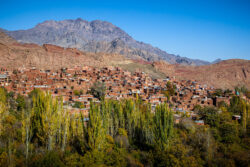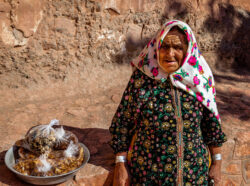
“Why go there? Isn’t it dangerous?” was pretty much all I heard in response to telling people I was off to Iran. Whilst the west today has a bit of a confrontational relationship with Iran, it is in fact quite safe and the people are some of the friendliest and most hospitable I’ve ever met!
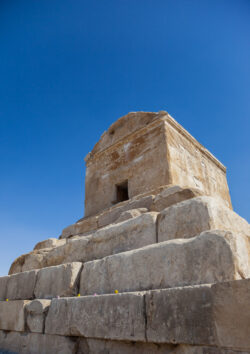
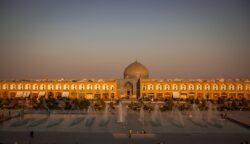
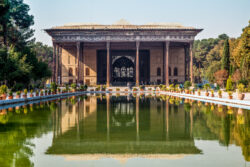
In addition, the history of the region (it is ancient Persia after all) is quite amazing and with 2,500 year old cities such as Persepolis, and the beautiful garden city of Esfahan to see, its definitely worth visiting and I can highly recommend it.
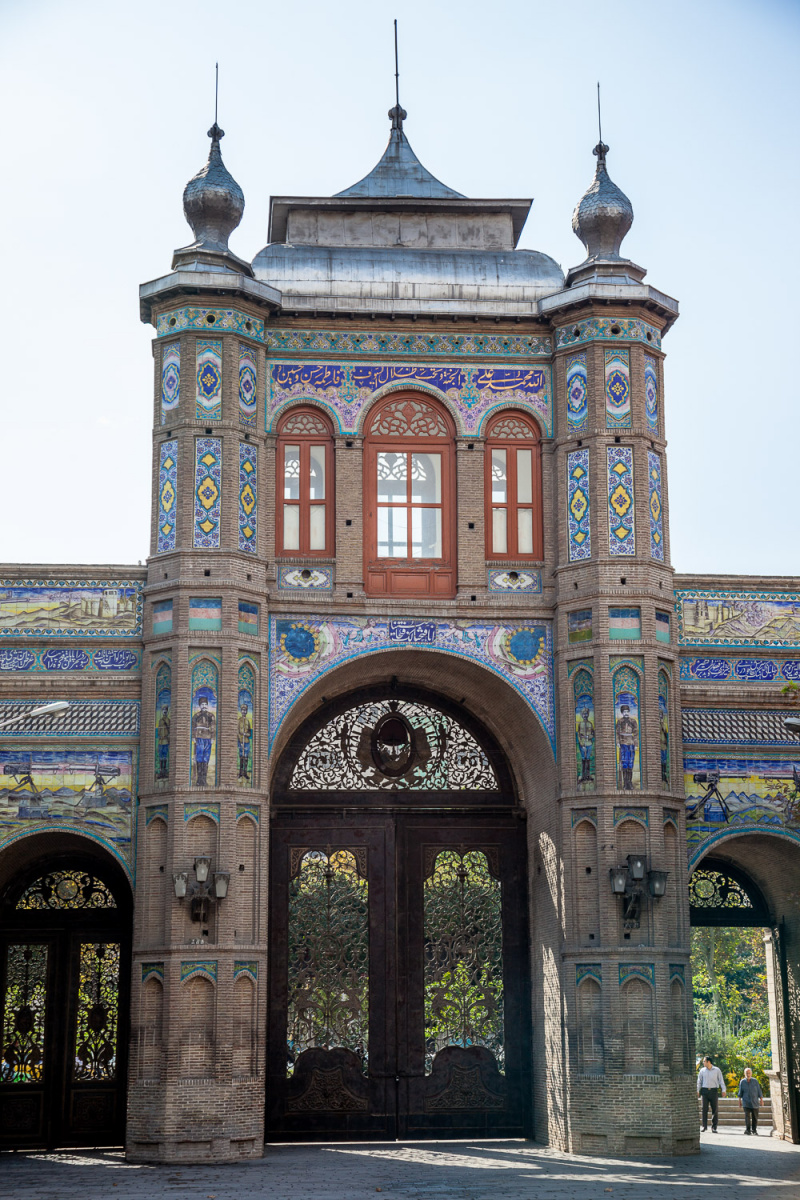
Old City Gate
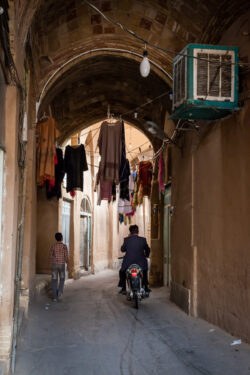
Modern day Tehran is like any other city, but here and there you can find remenants of its past such as this old city gate.
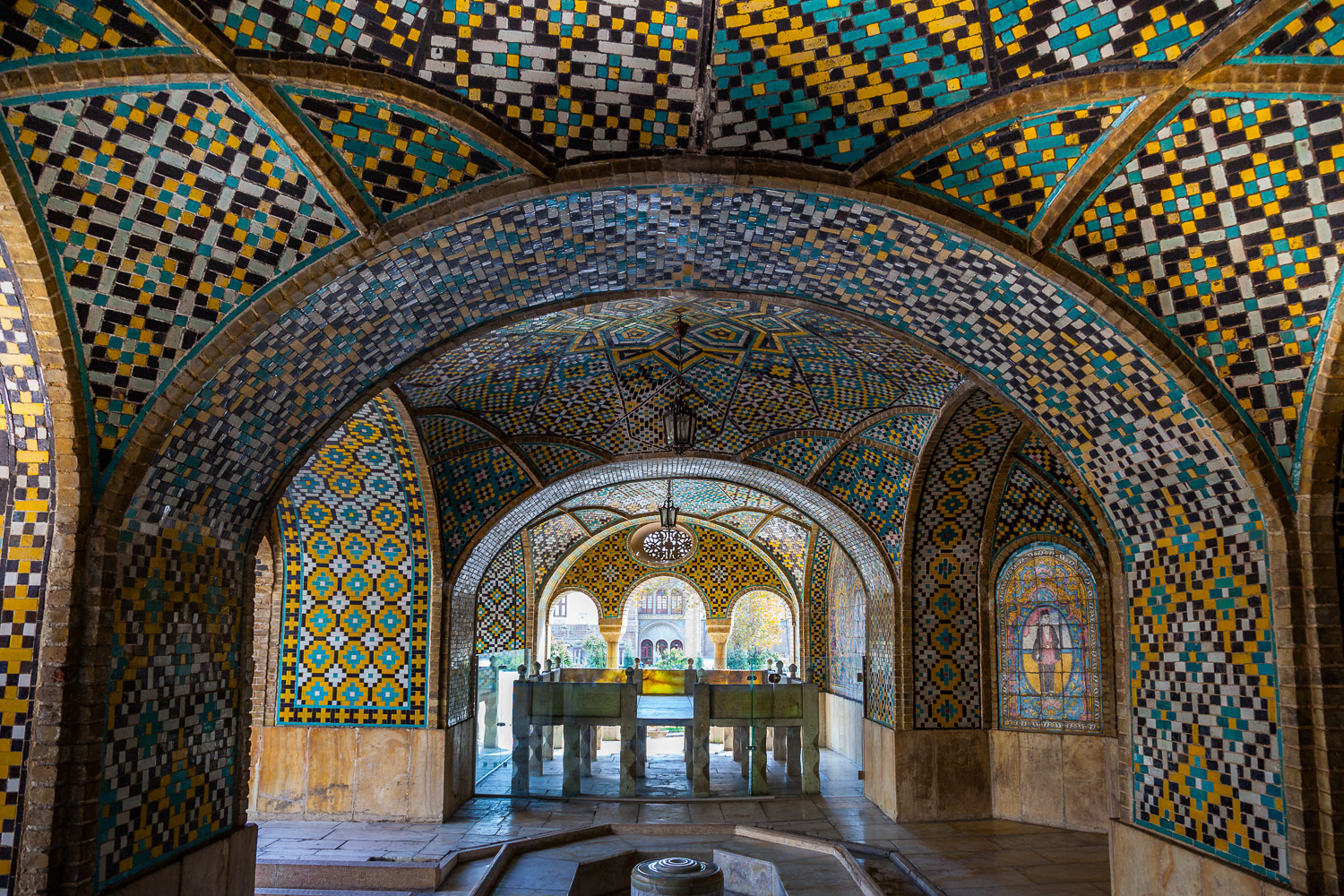
The Pool Room
Golestan Palace
Tehran
This room within the Golestan Palace compound is so named because of the small pool and fountain in the centre of the room (just visible at the bottom of the shot).
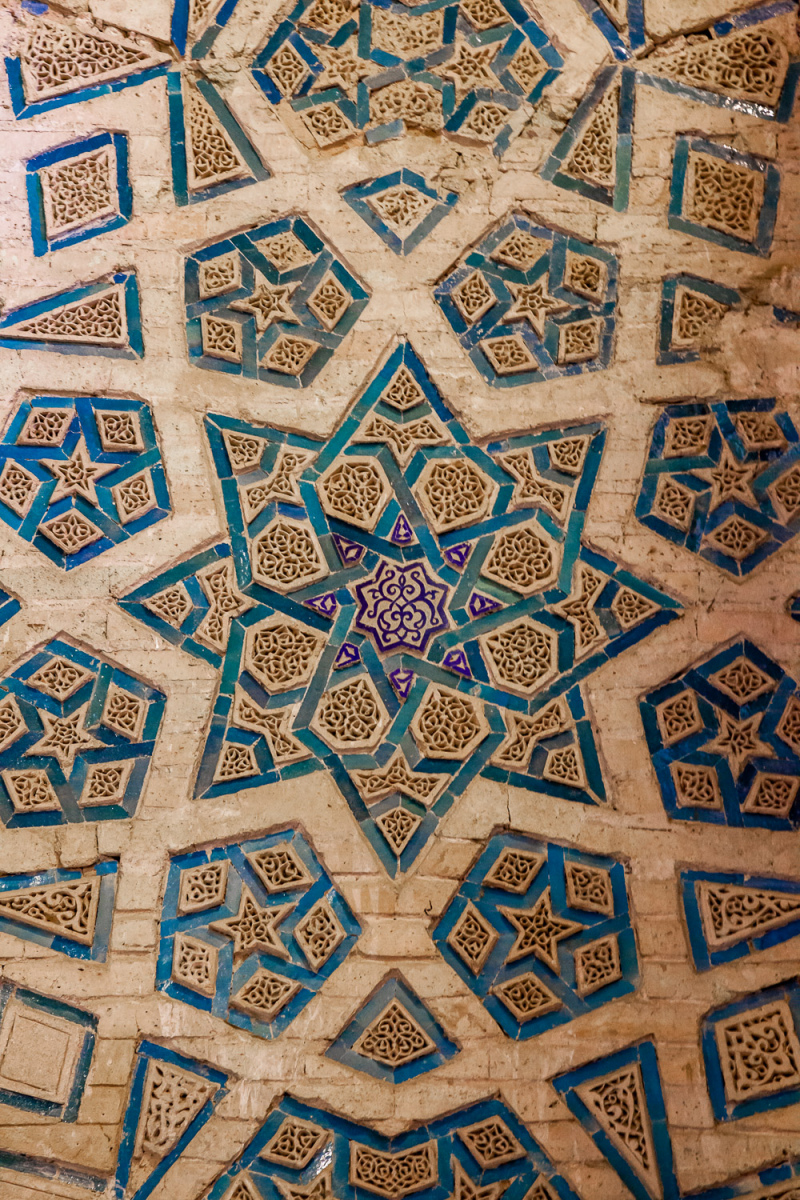
Patterned Walls
Oljeitu Mausoleum
Soltaniyeh
The walls within the UNESCO Heritage site are slowly being restored after being covered over for many years.
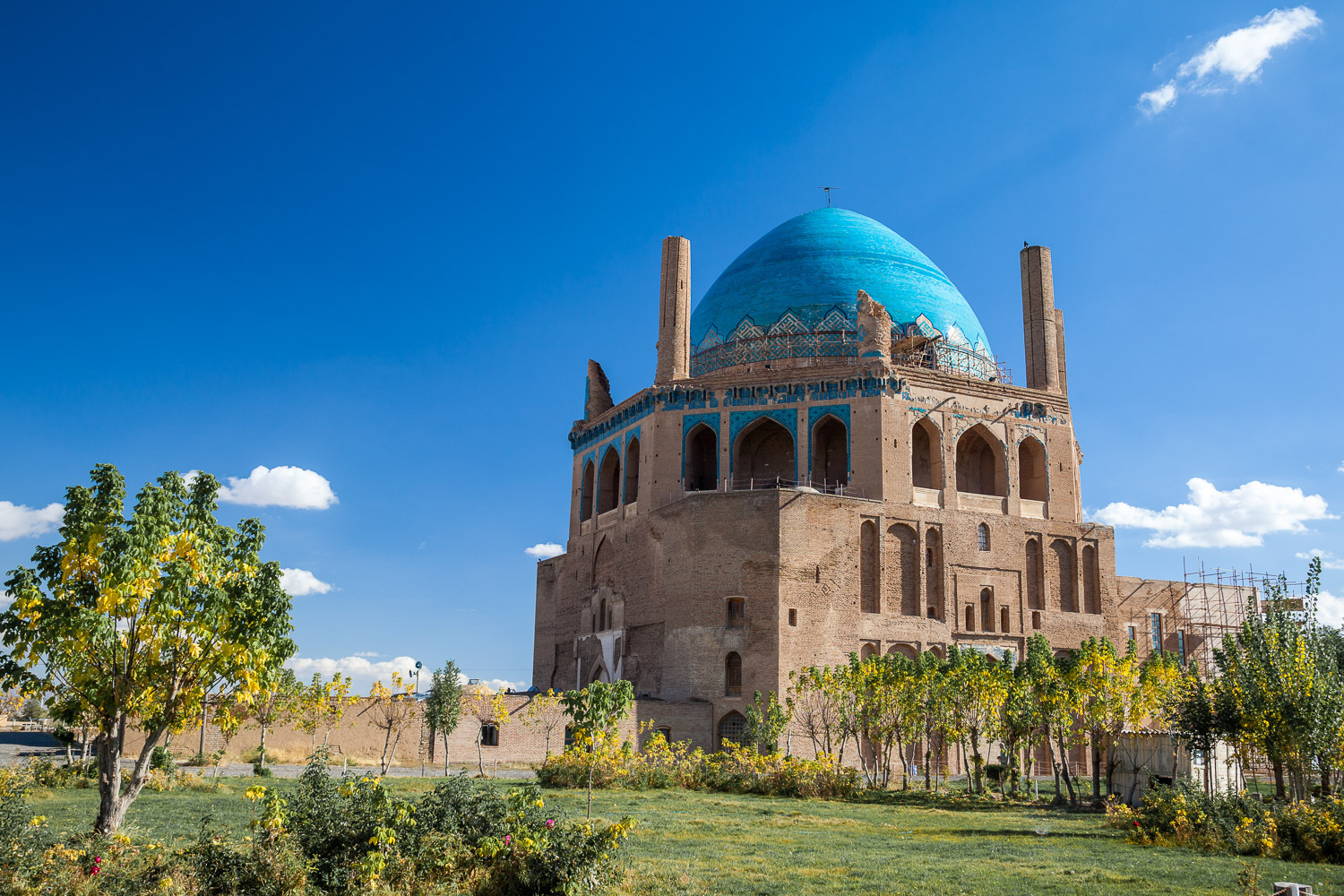
Blue Dome
Oljeitu Mausoleum
Soltaniyeh
View of the worlds tallest brick dome! Built in the early 1300's much of the town was destroyed by invaders and earthquakes. The majority of the mausoleum survived and is currently undergoing extensive restoration.
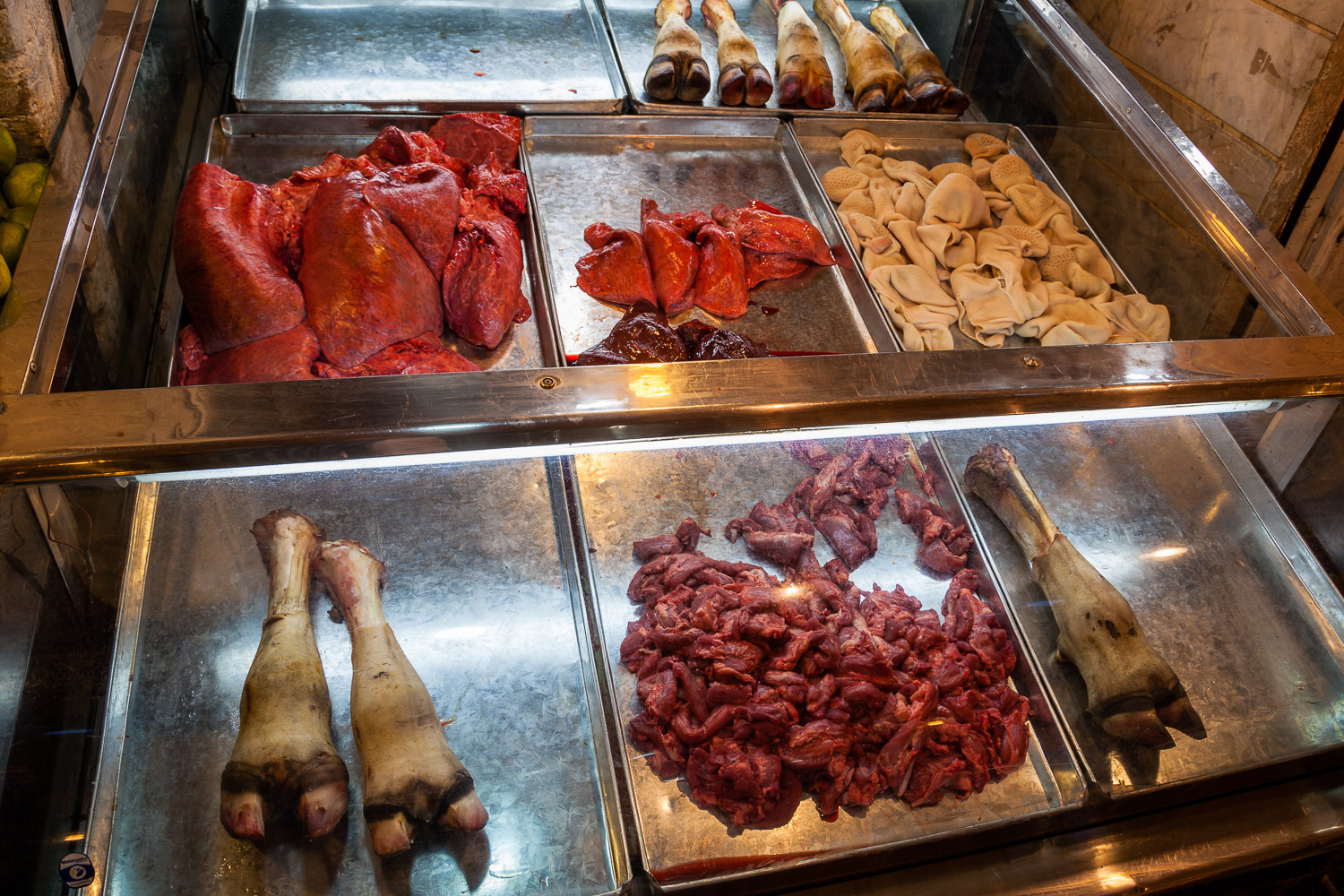
Eat Everything or No Dessert!
Bazaar
Zanjan
The stalls in the ZanJan bazaar sell an interesting selection of meat products if you need to grab something "on the hoof"! Also available are lung and tripe. Yum!
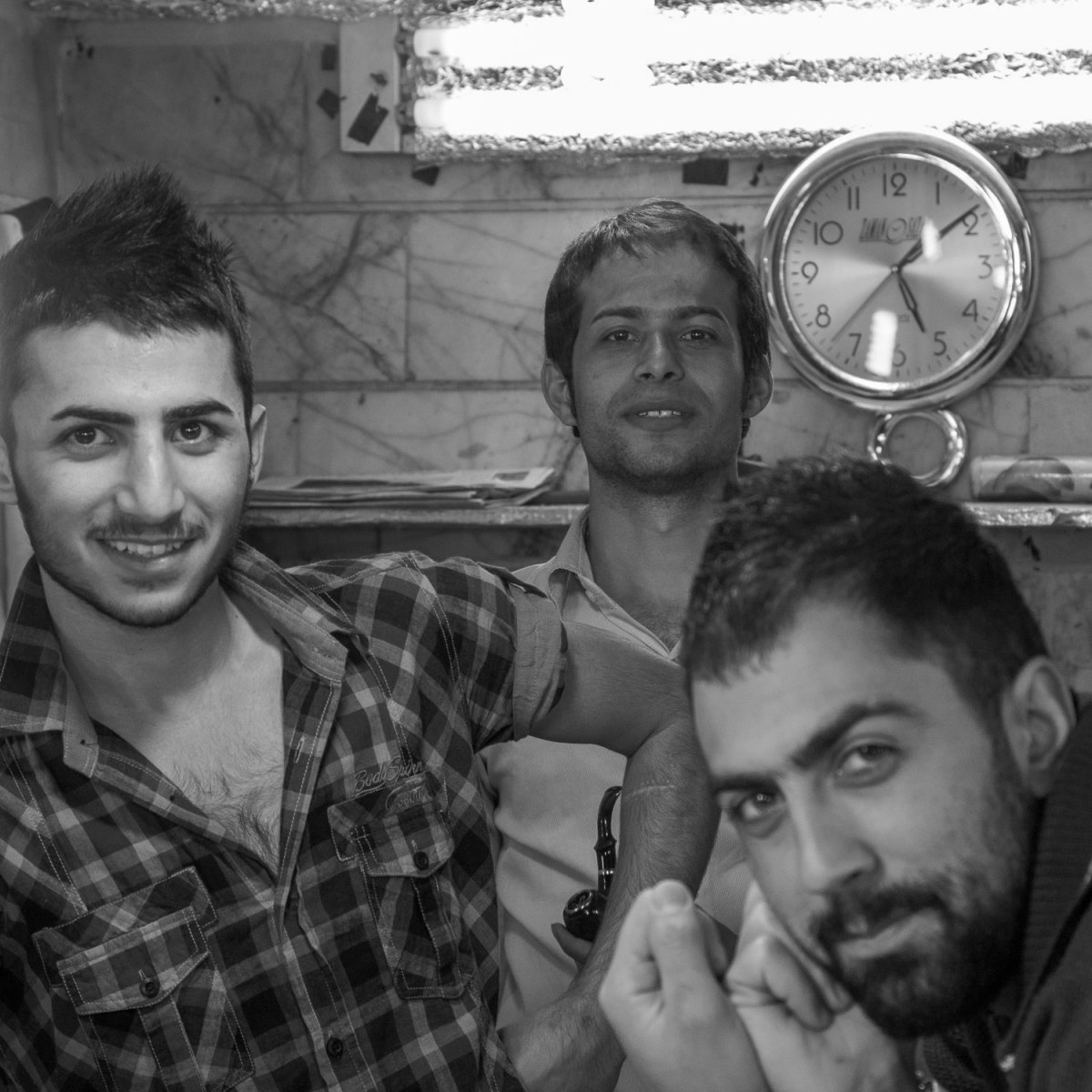
Meat Sellers
Bazaar
Zanjan
These three guys were very funny and ran the associated meat and offal stall in the bazaar. Nice to see pipe smoking is back in fashion!
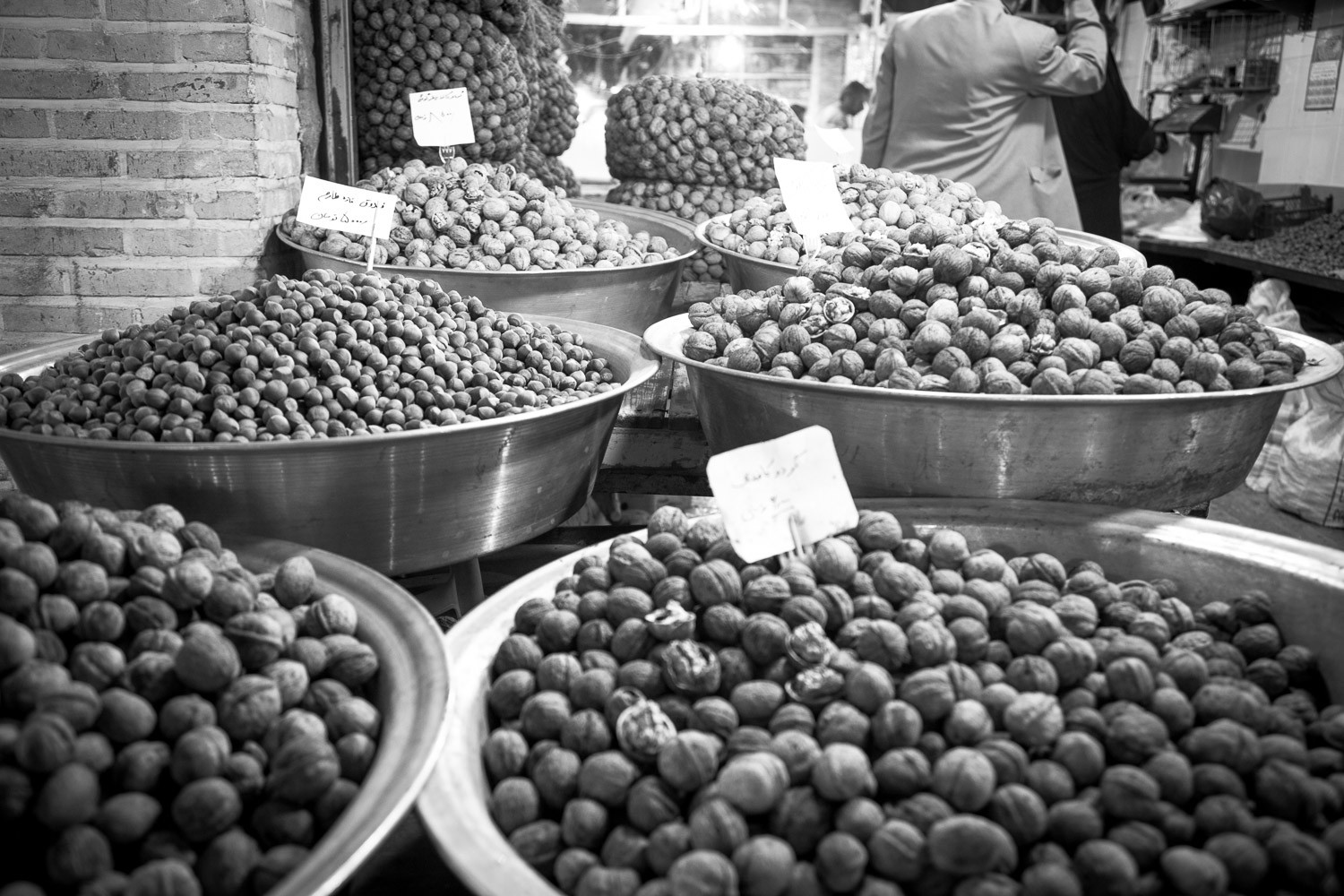
Nuts o Hazlenuts
Bazaar
Zanjan
Nuts are big in Iran. This stall sold a selection of Walnuts, Hazlenuts and Pistachios.
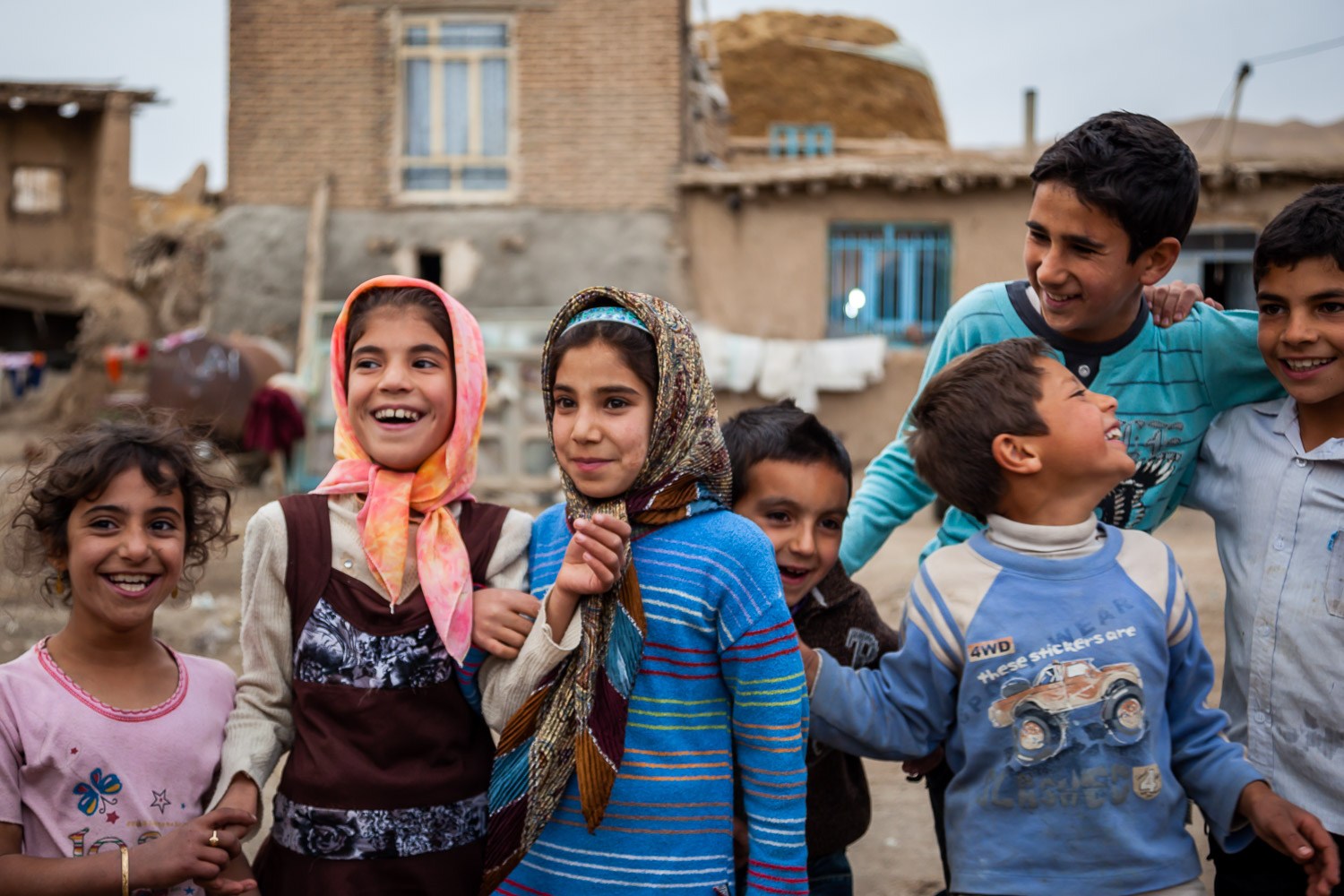
The Village Kids
Near Takab
We wandered to a rural village and were greeted by these kids who were very happy to see and chat with us.
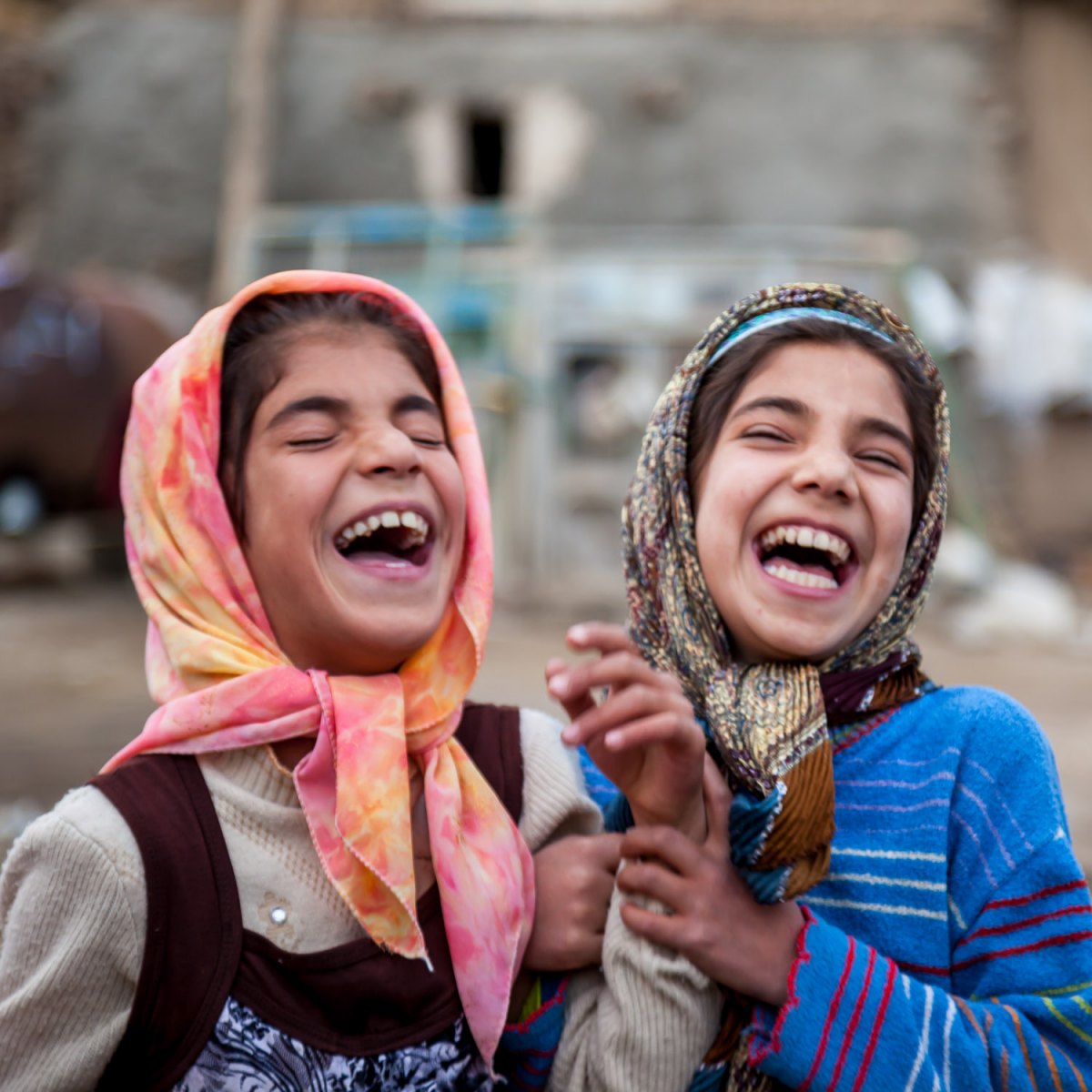
The Girls
Near Takab
These two young girls spent most of the time with us in hysterics, laughing their heads off.
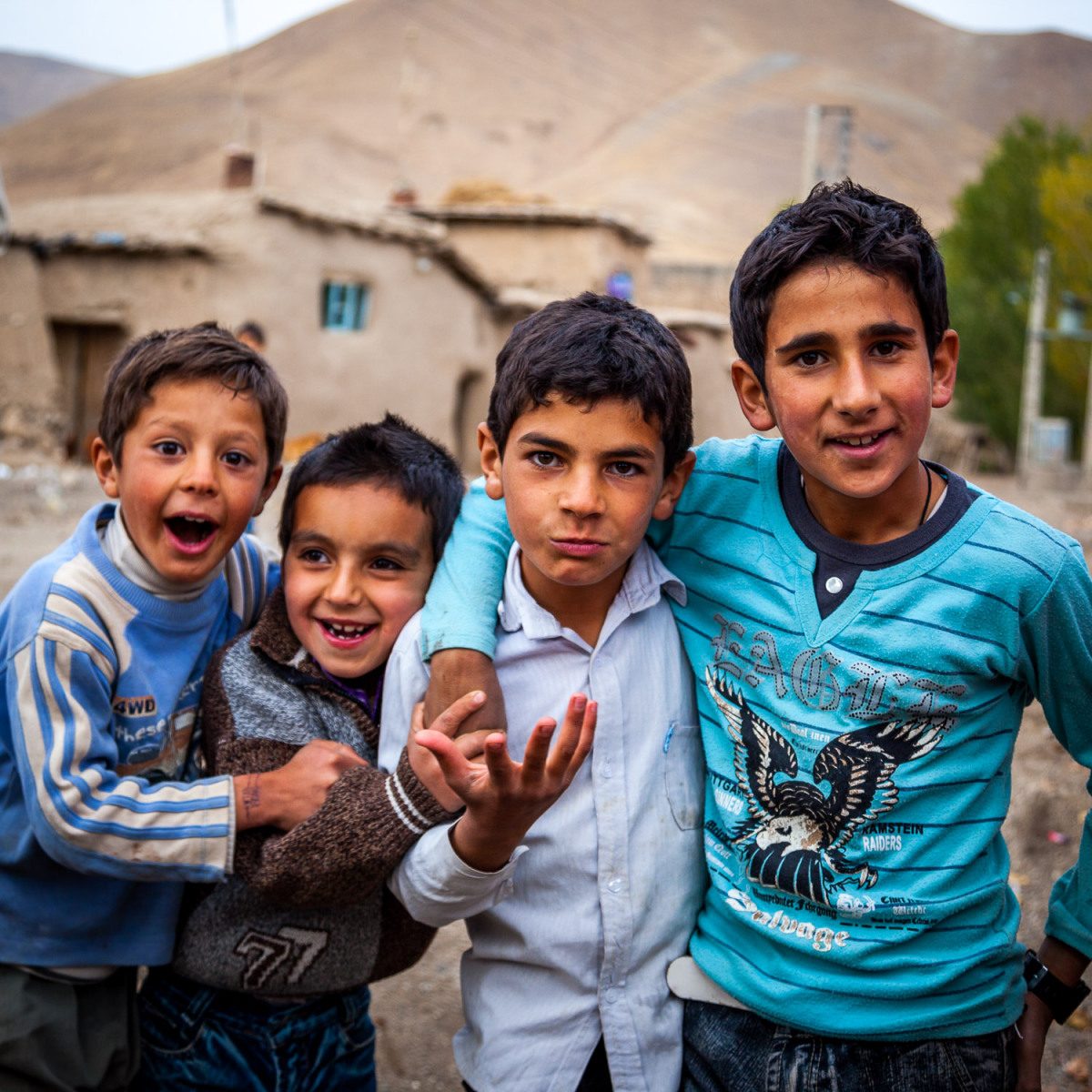
The Boys
Near Takab
The cheeky boys in the village. The lad in the middle was asking is we had any sweets. It turns out he already had some midget gems and tried to show off but throwing one into the air and trying to catch it in his mouth. He completely missed but this didn't dampen his mischievousness one bit!
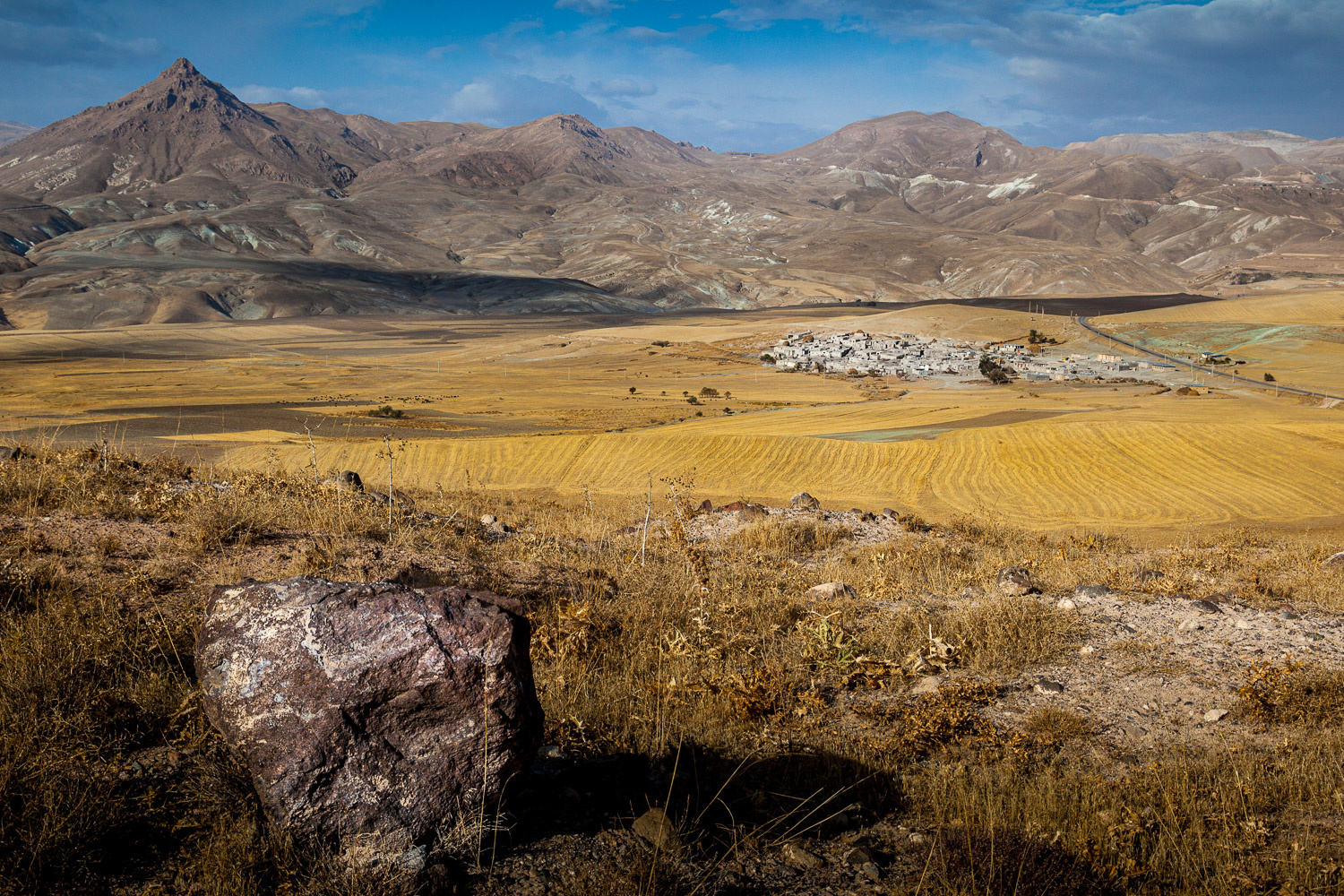
In the moutains
A view across the mountains as we drove back to Tehran from Takab.
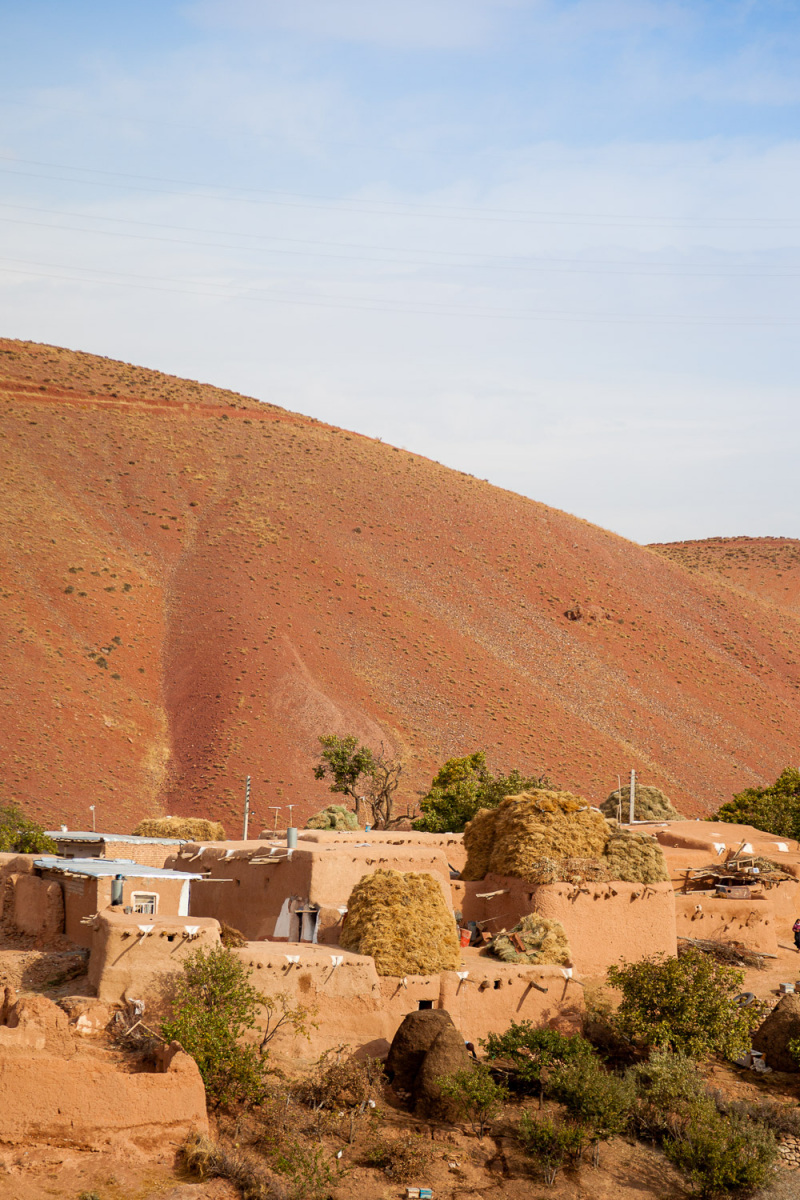
Giant Haystacks
Many of the houses inthe rural villages have huge haystacks piled on the roof. Although it gets quite warm in the summer, it gets very cold (and snowy) in the winter so this is probably a simple form of insulation.
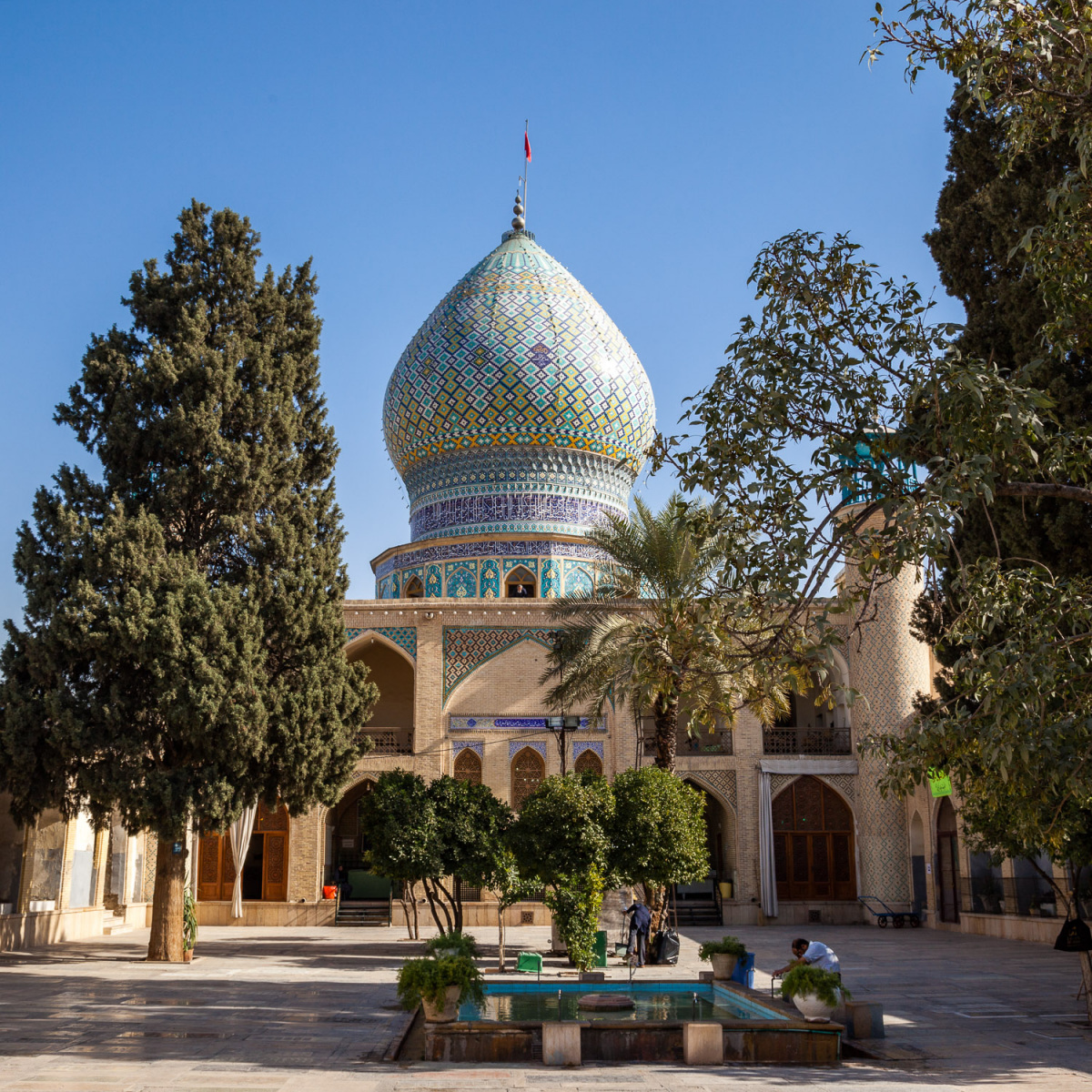
Shiraz Shine
Imamzadeh-Ye Ali Ebn-e Hamze
Shiraz
The tomb of Emir Ali, a nephew of one of the Shahs. The original was destoryed by earthquakes but rebuilt in the 1800's.
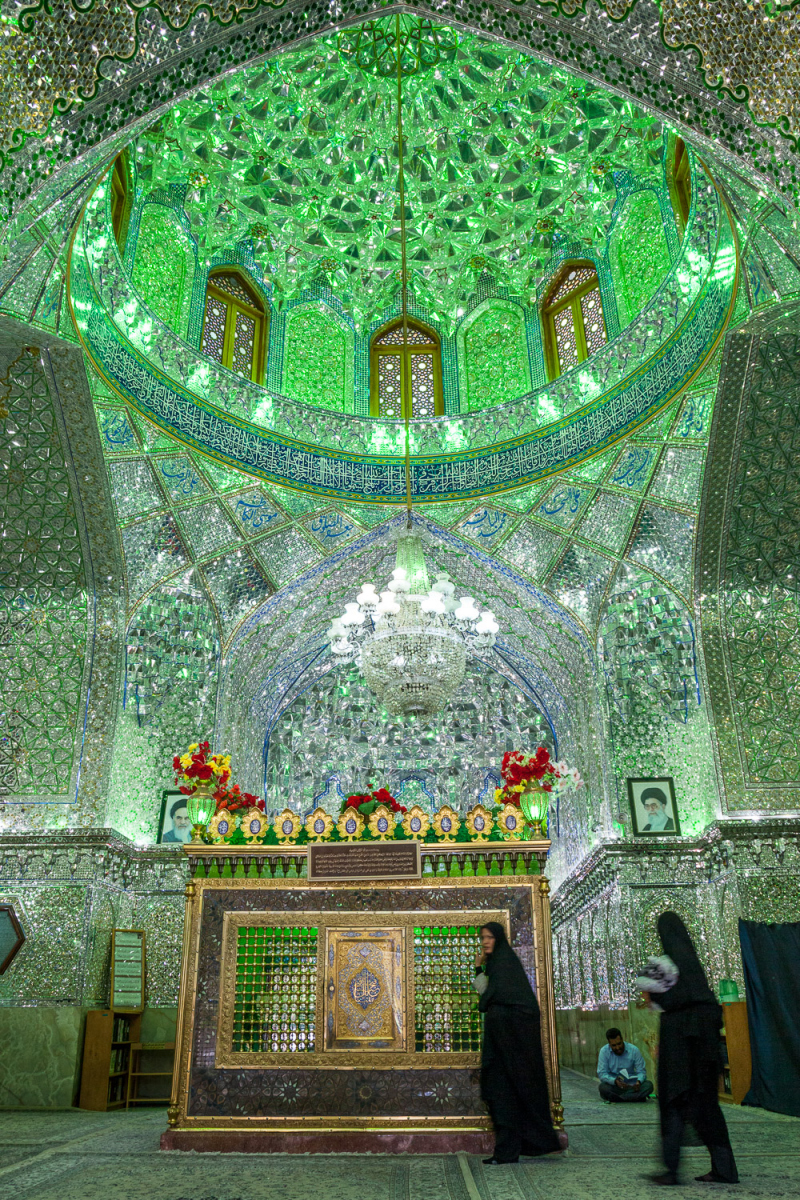
Hall of Mirrors
Imamzadeh-Ye Ali Ebn-e Hamze
Shiraz
Inside, every square inch of wall and roof is decorated with mirrors. The effect is quite dazzling, although it proved a challenge to photograph! The square chamber towards thebottom of the shot is the actual shine itself and contains the tomb of Emir Ali.
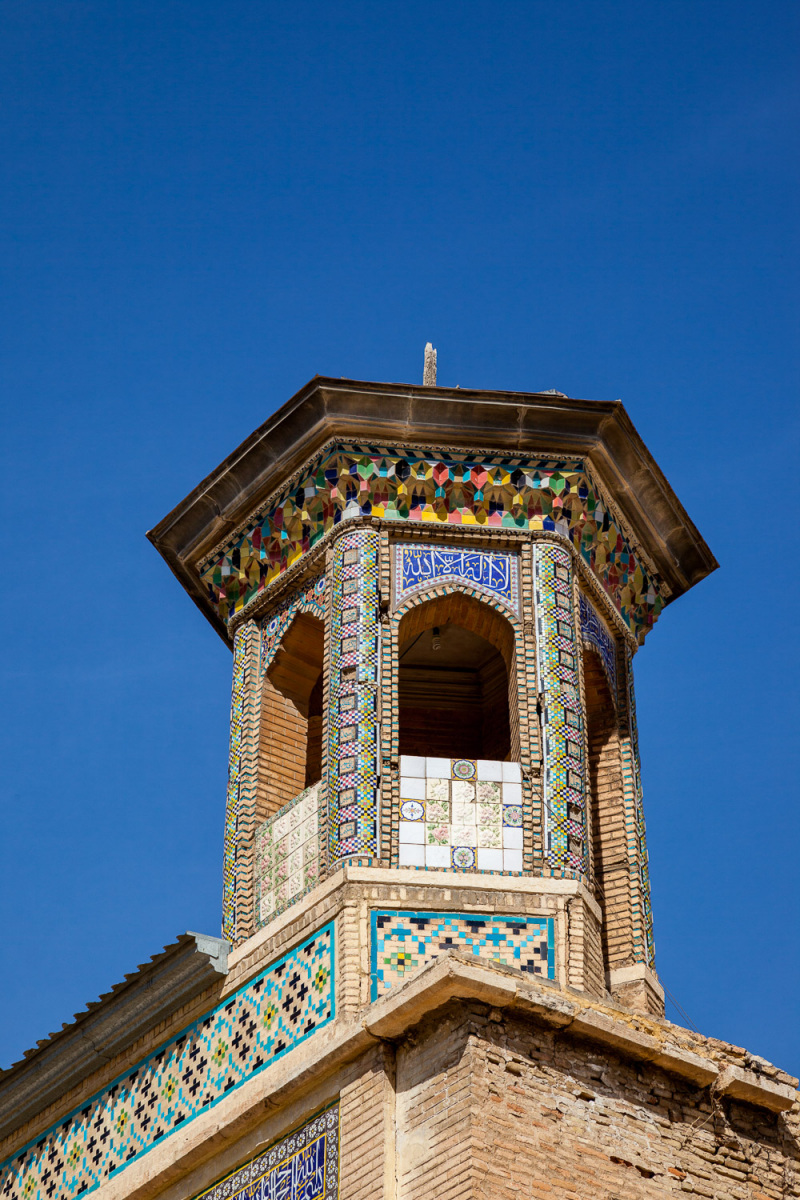
Roof Tower
Shiraz
A decorated colourful turret on the corner of a rooftop in Shiraz.
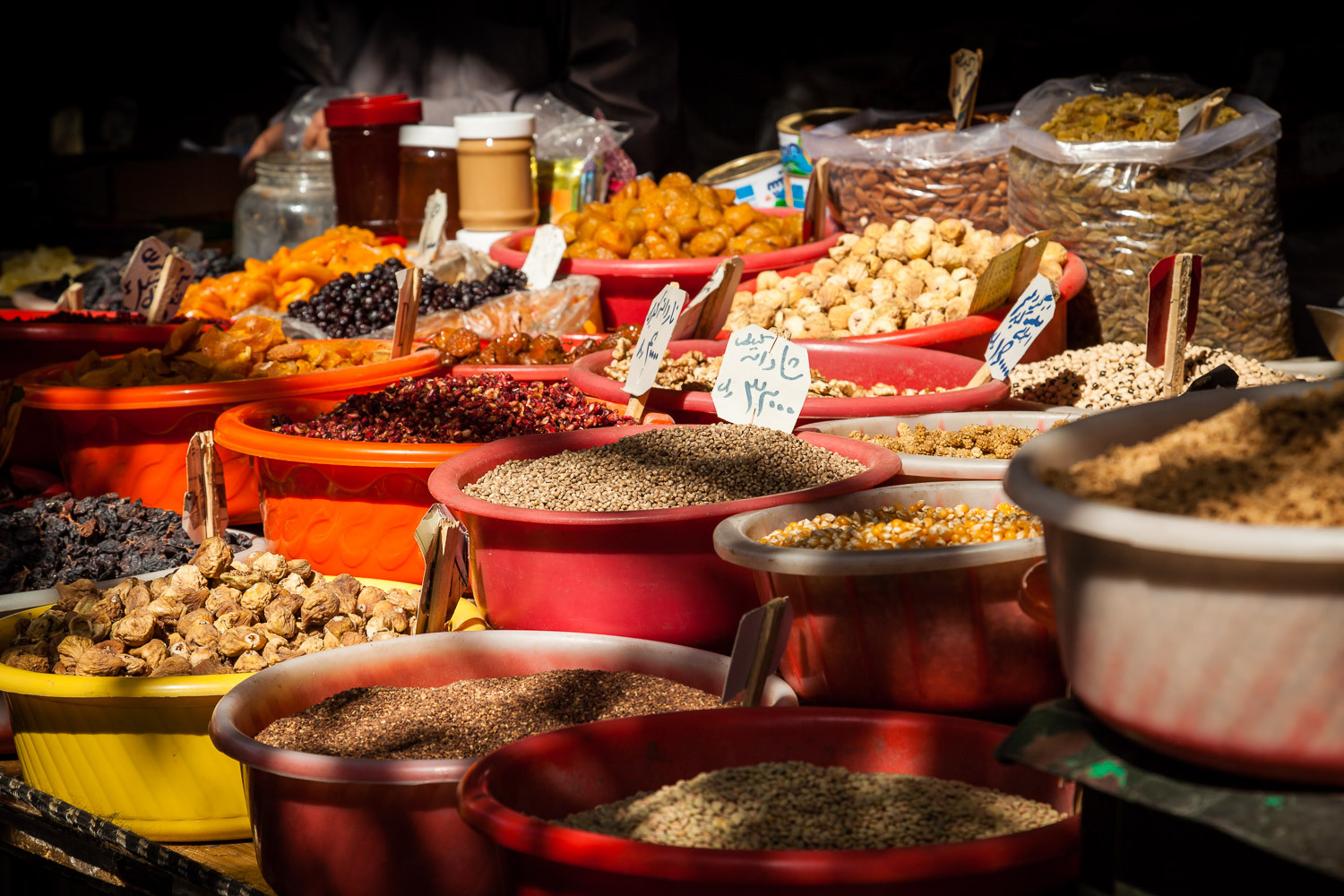
Fruit and Nut
Bazaar
Shiraz
A selection of seeds, nuts and dried fruit on sale at one of the stalls inthe bazaar.
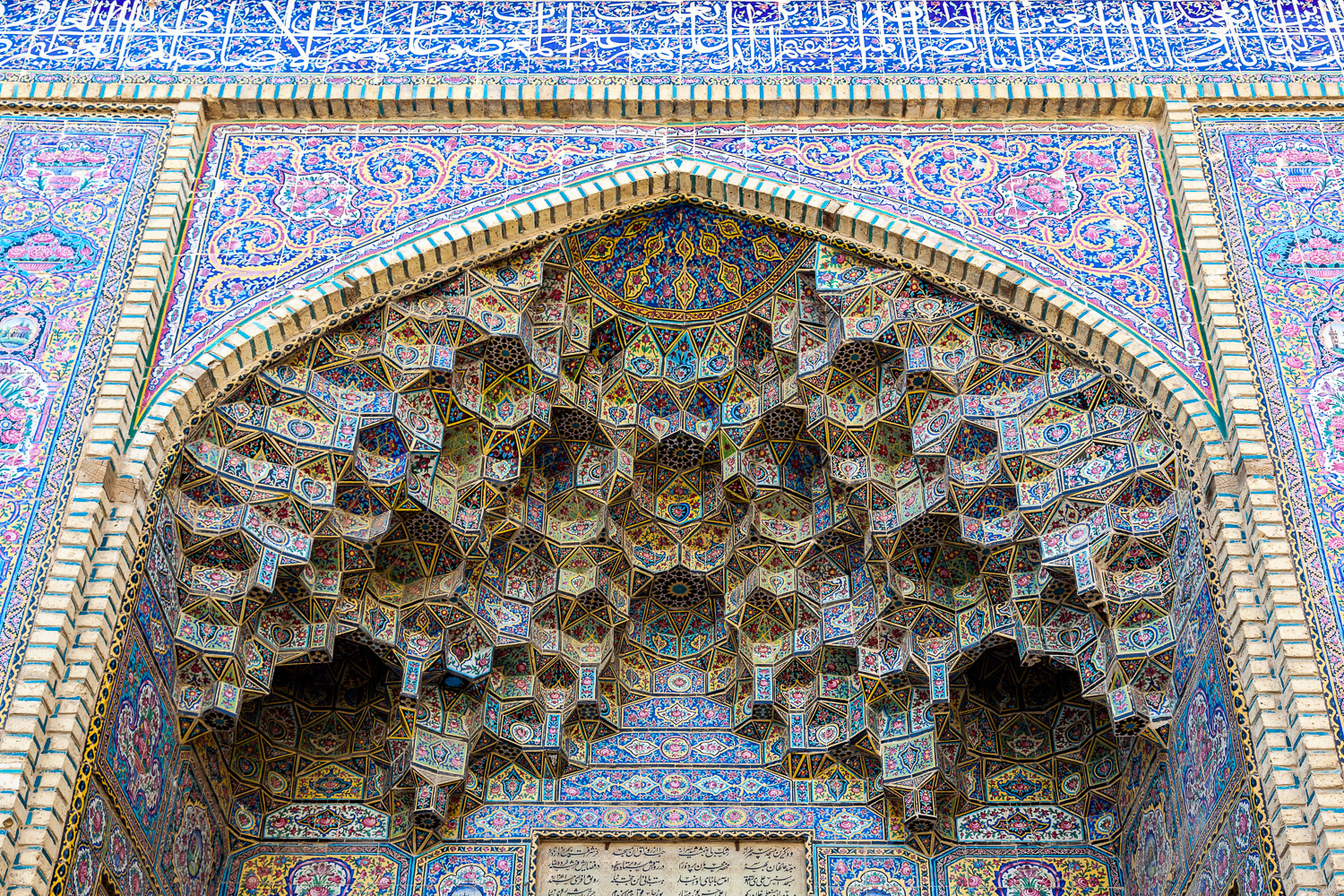
Arch Decoration
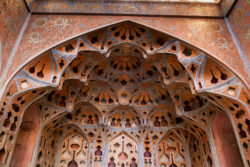
The unsual decoration that is part of many of the mosque arches.
It vague reminds me of either mosaic stalactites or a colourful wasp nest! Either way the intricacies of the designs are impressive.
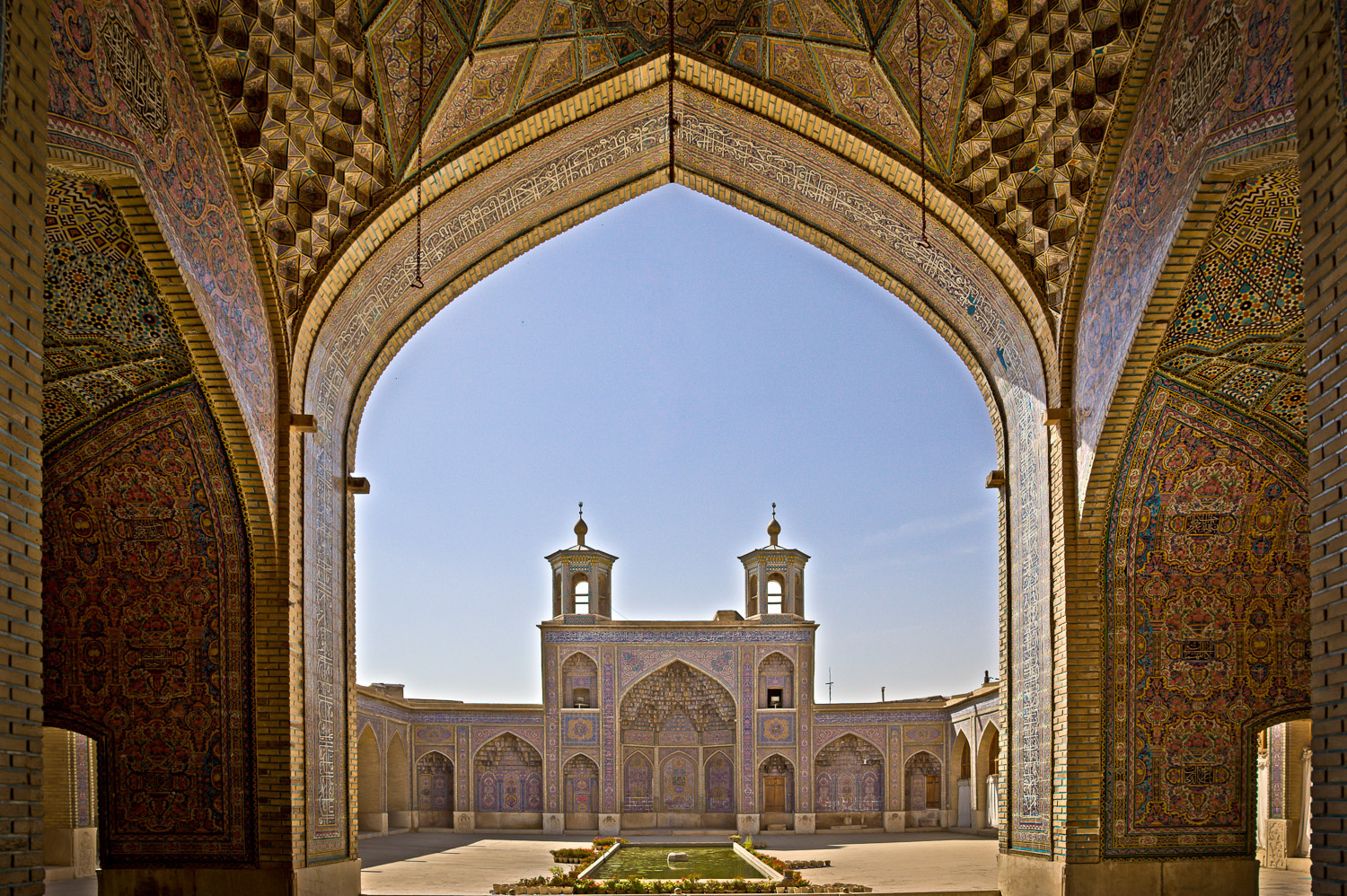
Mosque Courtyard
Nasir-Ol-Molk Mosque
Shiraz
One of the most beautiful and elegant mosques in southern Iran. Every so often in the walls you can find a wooden brick. These are placed there as protection against earthquakes as the wood is more flexible and helps absorb some of the stresses.
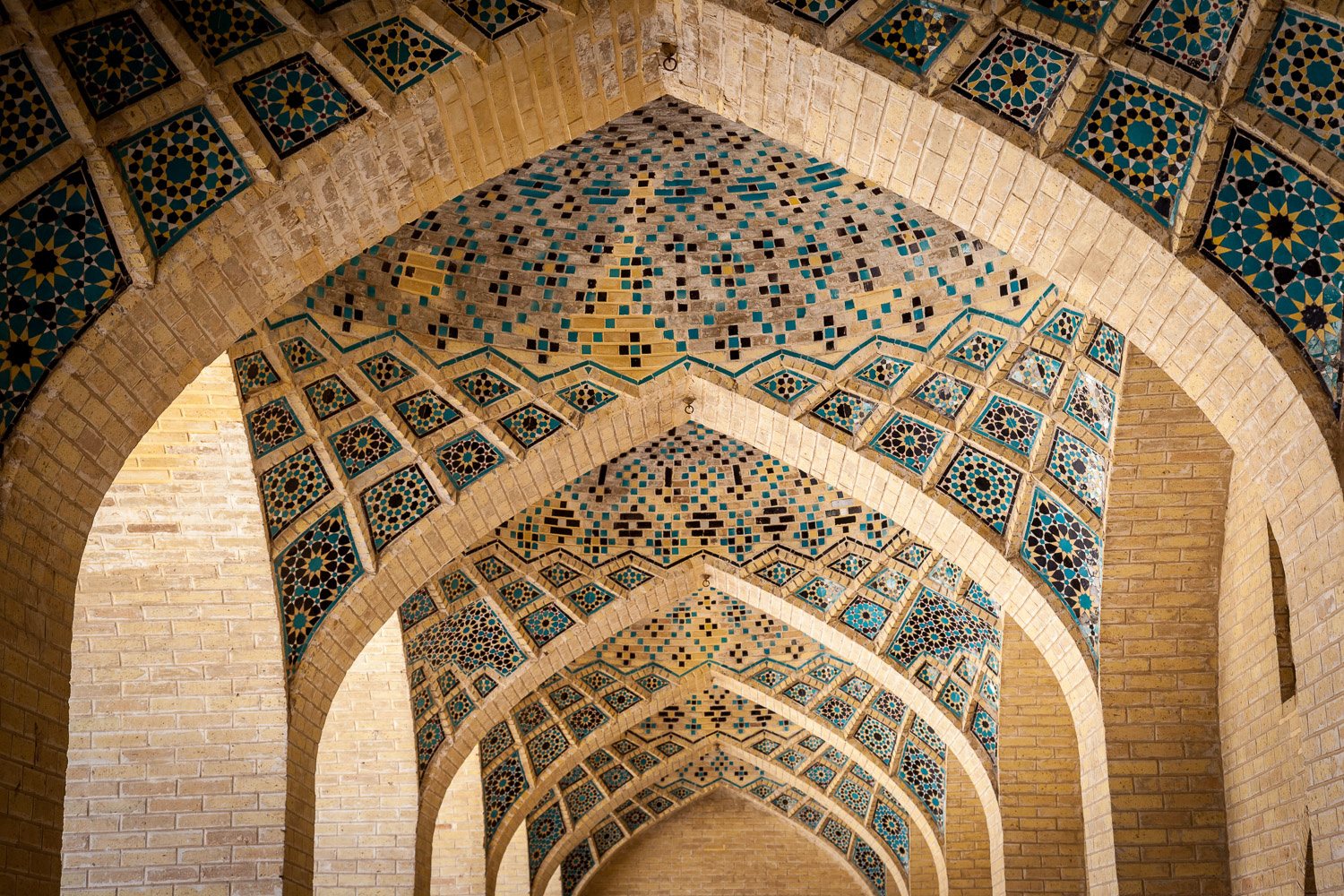
Tiled Arches
Nasir-Ol-Molk Mosque
Shiraz
A view of the decorated arches down one of the side colonades within the mosque.
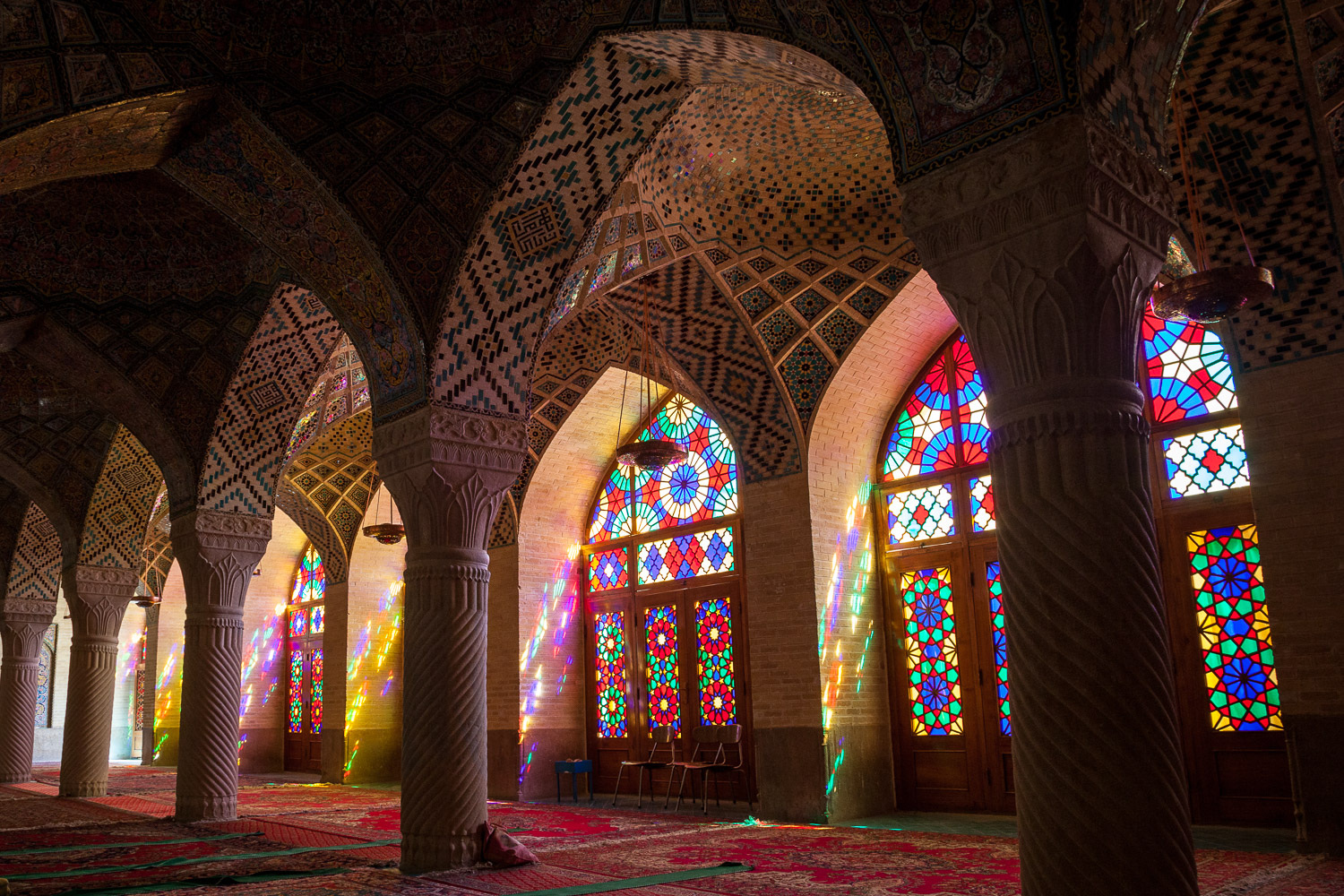
Winter Prayer Hall
Nasir-Ol-Molk Mosque
Shiraz
The winter prayer hall in the mosque contains some stunning stained glass windows and carved columns. When we arrived, midday prayers were just ending and afterwards we managed to slip into the room and see the amazing colours the light coming through the windows produced.